


Selling a House With a 20-Year-Old Roof: What Are Your Options?

Key Takeaway
You can sell a house with a 20 year old roof without replacing it, as long as the roof is serviceable, insurable, and acceptable to the buyer's lender. Roof age alone is not a deal killer. What matters is the roof's current condition, whether FHA or VA financing can be approved, and whether a buyer can get homeowners insurance to close.
Yes, You Can Sell a House With a 20-Year-Old Roof

You can absolutely sell a house with a 20 year old roof. The roof age by itself does not make your home unsellable, and it is not automatically a deal killer. What matters far more is the roof's material, its current condition, and how it's handled in the sale.
If you're getting ready to sell and you're worried the roof could blow up the whole thing, that's a fair concern. Maybe you're already under contract and the inspection report just came back. Either way, you deserve a clear answer instead of a scare tactic.
Here's the honest version: the real question isn't the roof's "birthday." It's four separate things that buyers, lenders, and insurance companies care about. Depending on how those four questions shake out, you have real options. You can list the home on the market, have the repairs funded upfront so you sell for more, or take a fast cash offer and sell as is. No single answer fits every roof or every seller.
What Does a 20-Year-Old Roof Actually Mean?
A few terms get mixed up constantly, so let's separate them. Roof age is simply how long ago it was installed. Useful life is how long the roof was designed to protect the home. Remaining useful life is how many years it likely has left. And actual condition is what the roof is doing right now, today.
The National Roofing Contractors Association notes that most new roofs are designed to provide useful service for roughly 20 years. That's a design target, not an expiration date stamped on the shingles. Materials like slate, clay tile, and certain metal roofing systems can last considerably longer.
Material matters a lot here. Traditional 3-tab asphalt shingles tend to land around that 20 year mark. Architectural (dimensional) asphalt shingles usually run longer. Metal and tile often outlast both by a wide margin. Climate, poor installation, and whether anyone maintained it over the years all push the real number up or down.
So a 20 year old roof deserves a closer look, not a judgment based on just its age. But age and failure are not the same thing. Plenty of roofs at this age are still keeping water out just fine, and plenty of others gave up early. The only way to know which one you have is to look at the roof's actual condition.
How Do You Know If an Aging Roof Needs Attention?
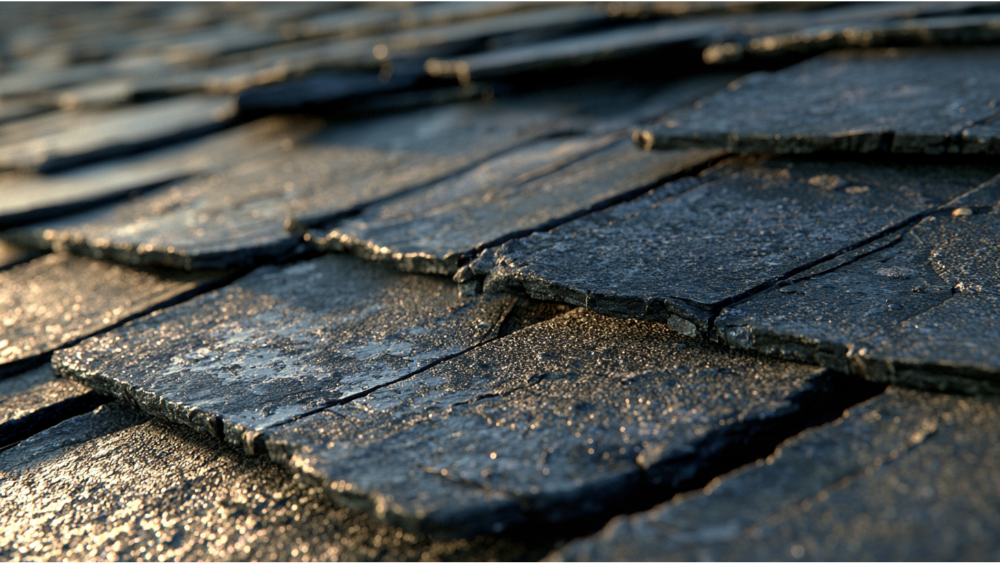
Some visible signs are easy to spot from the ground or a ladder. The Insurance Institute for Business & Home Safety points to several observable indicators on asphalt shingles:
- Granule loss (bald spots or granules collecting in gutters)
- Blistering or buckling
- Missing shingles or shingles that have curled or stopped sealing down
- Exposed or backing-out fasteners
- Staining on the surface or the ceilings inside
Here's the part most articles skip: these signs mean "get it looked at," not "replace it tomorrow." Cosmetic aging is different from active roof leaks. A roof can look a little tired and still be watertight. An aging roof can also look okay from the curb and be leaking into the attic.
The reliable way to settle it is a professional inspection and written assessment from a licensed roofing contractor. That gives you a real opinion on condition and remaining useful life, instead of a guess. It also becomes a document you can hand a buyer, which cuts down on anxiety and back-and-forth later. A small roof repair now, documented properly, is often all an old roof needs to carry a sale.
The Four Questions That Decide Whether the Roof Affects Your Sale
A roof can clear one hurdle and trip over another. That's why a blanket answer like "just replace the roof" or "just sell cash" is usually wrong. The smarter approach is to run your roof through four separate questions:
- Is the roof still serviceable?
- What do you legally have to disclose?
- Can the buyer finance the house?
- Can the buyer insure it?
Your right selling path depends on the answers, not on the roof age alone.
Is the Roof Still Serviceable?
Serviceable means the roof keeps water out. No active leaks, no material failure, no structural or decking concerns underneath. That's the bar.
If the roof is serviceable with only isolated issues, targeted repairs can often extend its life by another two to five years. That can be enough to carry you through a sale without a full replacement. If the roof is actively leaking or the decking is compromised, that's a different conversation.
The cleanest way to establish this is a written assessment and remaining-life opinion from a licensed roofing contractor. It tells you what you're actually working with. This is the gate that determines whether a traditional listing is even realistic, because a buyer's inspector and appraiser will be asking the same question about the roof's actual condition.
What Do You Legally Have to Disclose?
Wherever you sell, you're generally required to disclose known material defects under applicable law. For a roof, that means known roof leaks, past repairs, storm damage, insurance claims, and any unpermitted work you're aware of.
This is where the biggest myth lives: selling "as is" does not mean "undisclosed." As is describes who pays for repairs. It does not erase your duty to tell a buyer what you know. Hiding a known leak is how a closed real estate transaction turns into a legal problem months later.
In California, the Transfer Disclosure Statement specifically asks for the roof type, its approximate age, and any known significant roof defects. We'll cover the California details further down. Treat this section as general information, not legal advice. Disclosure rules and exemptions vary, so confirm your situation with a qualified professional.
Can the Buyer Finance the House? (FHA, VA, and Conventional Loans)
Most buyers borrow to buy. So if the roof scares off a loan, it shrinks your pool of potential buyers. Here's how the major programs actually treat roof condition, because this is where a lot of online advice gets it wrong.
FHA has a specific standard. Under the current HUD Single Family Housing Policy Handbook (4000.1), the roof must prevent moisture from entering, provide reasonable future utility, and have at least two years of remaining physical life. If the appraiser thinks there's less than two years left, the appraisal gets made subject to a professional roofer's evaluation. FHA does not reject a roof just for being a 20 year old roof. It's about roof condition and remaining life.
VA is condition-based. The current VA minimum property requirements say a roof covering must prevent moisture from entering and provide reasonable future utility and durability. The current VA roof section does not state a universal number of remaining years. A lot of articles pair FHA and VA together and claim both demand two or three years. That's not accurate for VA.
Conventional loans (Fannie Mae and Freddie Mac) are also condition-based, with no universal roof-age rule. Minor wear that doesn't affect safety or soundness can often be appraised as is. But active leaks or significantly worn, curled, or missing shingles can push the appraisal into "subject to repairs" territory. Not all lenders handle a borderline roof the same way, so the specific loan matters.
One clarification that saves confusion: an appraisal, a home inspection, and a roofer's assessment are three different things. The appraisal judges value and loan acceptability. The home inspector informs the buyer and produces the inspection report. The roofer evaluates the roof within their trade. Don't assume one covers the others. Since first time buyers, FHA, and VA buyers make up a large share of the market, financing acceptance directly affects how many people can even bid on your home.
Can the Buyer Insure the House?
This is the gate most articles miss, and it's the one that quietly kills deals. A buyer who's borrowing needs homeowners insurance to close, because the mortgage servicer requires it. If the roof blocks a policy, it can block the sale, even when the appraisal was fine.
Insurance companies do look harder at a roof in the 15- to 20-year range. But there is no universal rule that insurance companies won't cover a roof over 20 years old. The California Department of Insurance guidance doesn't set a statewide age cutoff, and eligibility and pricing vary by carrier. Anyone telling you "they won't insure it, period" is overstating it.
What can happen on an old roof is a shift in how it's covered. Some policies insure an aging roof at actual cash value (depreciated) rather than full replacement cost. That affects the buyer's payout after a claim, which affects how they feel about the purchase.
The key takeaway: a buyer credit puts money in the buyer's pocket, but it doesn't magically make an uninsurable roof insurable. So test insurability early in the process, not at the closing-week deadline when there's no time left to fix anything. Insurability is the quiet deal killer behind many late collapses.
Should You Repair, Have the Seller Replace the Roof, Offer a Buyer Credit, or Sell As Is?

There's no blanket rule here. The right move depends on the roof's actual condition, how much cash you have, your timeline, and whether financing or insurance are at risk. Let's lay out the four common moves side by side.
Deciding whether a replacement makes financial sense comes down to your numbers, so treat these as general ranges, not a quote. Replacing the entire roof commonly runs somewhere in the $9,000 to $20,000 range depending on size and material, and roof replacements tend to recoup roughly 56% to 61% of their replacement cost at resale. When sellers discover an old roof during due diligence, buyers often ask for price reductions in the $5,000 to $15,000 range, and many mentally factor $10,000 to $20,000 for replacing the whole roof later.
One myth worth correcting, because it's repeated on well-ranked pages: the 2025 NAR Remodeling Impact Report found that 37% of surveyed REALTORS® recommended a new roof as a pre-sale project. That 37% is a recommendation rate. It is not the share of the replacement cost you recover at resale. Don't let that number talk you into or out of anything.
None of this is financial advice. Run your own math on your roof, your market, and your situation.
Your Three Paths to Sell a House With a 20 Year Old Roof
Here's where the four gates turn into a real decision. There are three practical ways to sell a home with an old roof, and we present them as equally valid. No funnel. No steering you toward the one that pays us most. The right path depends on the roof's actual condition, your cash, your timeline, and whether financing or insurance are in play. No pressure and no one-size-fits-all answer.
List Your Home on the Market
Let's be straight: a traditional listing can deliver the highest gross sale price. If your roof is serviceable, insurable, and financeable, and you can tolerate showings, negotiation, and a longer timeline, listing is often the strongest play for top dollar.
You'll go through the usual steps: buyer inspection, appraisal, and the buyer securing insurance. A clean roof condition assessment and your documentation make all of that smoother, and they strengthen your position in buyer negotiations. We support this path too, from setting a smart listing price and marketing to negotiations. We're not anti-agent, and a good real estate agent (or our team) will tell you honestly when listing is your best shot at maximum value.
Fix Now, Sell for More
Sometimes a roof project would meaningfully widen your buyer pool, but you can't or don't want to pay for it upfront. That's exactly what this path is for.
Property Sales Group funds the targeted repairs or the full roof replacement upfront, with no out-of-pocket expense to you. You earn more after the improvements are done. This is where our in-house construction team becomes a genuine advantage: we handle the roof work ourselves instead of marking up an outside contractor's bill. A new roof, or even a well-documented roof repair, can open the door to FHA, VA, and conventional loans and make the home insurable again, which means more people can compete for it. It's a practical middle ground when roof age is the only thing standing between you and a stronger sale.
Get a Fast Cash Offer From Cash Buyers and Sell As Is
If the roof is actively failing, if insurance or financing is a wall, or if you simply want certainty, selling to cash buyers may be the cleanest route. You sell as is. No repairs, no showings, no roof project to manage.
You can close in as little as 7 days or on your own timeline if you need more room to move. Depending on your transaction, you may also qualify for up to $100,000 cash advance before you move out. Every deal uses a standard California Purchase Agreement, escrow is opened within 24 hours of the signed contract, and our guarantee means a guaranteed close, or we pay you.
Worried about a lowball? Because our construction crew handles renovations in-house, we don't have to pad our offer to cover an outside contractor's margins, which lets us offer more than cash buyers who outsource every repair.
What to Do Before You List a House With an Old Roof

A little prep removes most of the drama. Work through this before you put the home on the market:
- Get a pre listing roof inspection. A written assessment typically costs about $150 to $400 and establishes condition and remaining lifespan.
- Gather your paperwork: the original installation date and invoice, the permit record, warranty documents, repair receipts, and any insurance-claim history.
- Note any interior stains or known leak history honestly, even old ones.
- Get a written roofer assessment that includes a remaining-life opinion.
- If you're considering a new roof, collect multiple comparable bids on the same scope of work so you can gauge the true replacement cost.
- Ask early about likely insurance and loan issues, before a buyer's deadline forces the question.
- Disclose known facts accurately.
- Compare your estimated net proceeds across all three selling paths, not just the gross listing price.
That last point is the one most sellers skip. A higher listing price can shrink fast once you subtract repairs, fees, carrying costs, and a buyer credit. Documentation does the quiet work here: handing a buyer a clear inspection report and roof record reduces their anxiety, heads off inspection surprises, and takes a lot of air out of negotiation.
California and Sacramento: What Local Sellers Should Know
If you're selling in California, a few local rules deserve a direct look.
Transfer Disclosure Statement. California's TDS asks specifically for the roof type, its approximate age, and any known significant roof defects. These disclosure requirements generally apply to transfers of residential property with 1 to 4 dwelling units, subject to statutory exemptions. If required disclosures are delivered after the purchase agreement is signed, the buyer generally has three days after personal delivery, or five days after delivery by mail, to terminate in writing.
Hire a licensed C-39 roofer. California's roofing classification is C-39, covering roofing and weatherproofing work. The Contractors State License Board recommends getting at least three written bids on identical scopes, verifying the contractor's license, and not defaulting to the lowest bid. For California home-improvement contracts, the down payment generally can't exceed 10% of the contract price or $1,000, whichever is less.
Sacramento permits and cool-roof rules. The City of Sacramento requires a permit for re-roofing. For low-rise residential work, replacing more than 50% of the roof surface can trigger California Energy Code cool-roof compliance, subject to listed exceptions. Permit forms, fees, and code editions change, so confirm current requirements before any work.
Wildfire considerations. CAL FIRE identifies the roof as one of a home's most vulnerable parts in a wildfire and recommends a Class A fire-rated roof. Under California's Safer from Wildfires framework, a Class A roof can qualify for an insurance discount, though discounts vary by carrier and property. This matters most in foothill markets like Auburn and Placerville, not every Sacramento neighborhood.
This is general information, not legal, tax, or financial advice. Property Sales Group serves Sacramento, Fair Oaks, Placerville, Auburn, and Antelope.
How to Keep an Old Roof From Killing the Deal Late

Most roof-related collapses happen in the final two weeks, and they're usually preventable. A few things to avoid and do:
- Don't wait for the buyer's insurance deadline to find out the roof is a problem. Test insurability early, since it's the quiet deal killer.
- Don't assume a buyer credit solves everything. A credit may not satisfy a lender's repair condition or make an uninsurable roof insurable.
- Don't conceal or downplay known leaks. It's the fastest way to turn a sale into a lawsuit.
- Put any repair or replacement agreement in writing, with the scope spelled out.
- Confirm permits and completion documentation so the file is clean at closing.
Run your roof through the four gates before you're under contract, not after. Handle them early and the roof age stays a footnote instead of a crisis.
How Market Conditions Change Your Best Move
Roof issues don't play out the same way in every market. In a hot market with limited inventory, experienced buyers may shrug off an older roof or accept a modest buyer credit, because competition is fierce and they don't want to lose the home. In a slow market, the same roof can become a bigger negotiating point, and a buyer concern over repairs can turn into a deal breaker if it isn't addressed. Weighing a full replacement against a lower price or an as is sale always depends on local market conditions. When buyers have more negotiating power, a documented roof record and a fair, upfront approach protect you from giving away more than you need to. Even a minor roof issue reads differently depending on whether buyers are competing or cautious.
Talk Through Your Options With Property Sales Group

You don't have to guess your way through this, and you don't have to accept whatever one-size-fits-all answer someone hands you. Whether your roof is fine, tired, or failing, you have real choices.
Find out what your home is worth with its current roof, and what it could look like after a new roof or targeted roof repair. We've worked with over 1,200 homeowners across Northern California. We're BBB accredited with an A+ rating, every deal runs on a standard California Purchase Agreement, and escrow opens within 24 hours of a signed contract. Our founder, Serge, is happy to talk it through with you directly.
Call or text to talk to an expert at 916-990-7376, or get a fast cash offer online. No pressure. Just real options to help you move forward with confidence.
Frequently Asked Questions
Can you sell a house with a roof over 20 years old?
Yes. Roof age alone doesn't make a home unsellable. What decides the outcome is the roof condition, whether a buyer can finance and insure the property, and how you disclose and address it through a roof repair, a buyer credit, a new roof, or an as is sale.
Is a 20-year-old roof considered old?
It's at the point where it deserves a professional look. The National Roofing Contractors Association says most new roofs are designed for about 20 years of useful service, though metal, tile, and slate often last longer. Age is a prompt to check the roof's actual condition, not proof the roof has failed.
How much does an old roof reduce a home's value?
There's no universal percentage, and anyone quoting one is guessing. In practice, buyers often ask for price reductions in the $5,000 to $15,000 range and may factor $10,000 to $20,000 for a future replacement cost. The real impact depends on the roof condition, your market, and whether it affects financing or insurance.
Should the seller replace the roof or offer the buyer a credit?
If the roof is serviceable and the buyer can still finance and insure the home, a buyer credit or price adjustment is often simpler. If the roof is failing or blocking conventional loans or a policy, a credit may not solve the problem, and a new roof (or an as is cash sale) may be the better route.
Does selling as is remove my disclosure obligations?
No. Selling as is means you're not agreeing to make repairs. It does not erase your duty to disclose known material defects. In California, the Transfer Disclosure Statement still asks for the roof type, approximate age, and any known significant roof defects.
