


Professional Photography for Selling a House: When It Pays Off (and When It Doesn't)

Key Takeaway
Professional photography for selling a house is almost always worth paying for on public listings, because 51% of buyers find the home they buy online and 83% rate listing photos as very useful. A basic package runs about $150 to $350 for roughly 20 to 40 edited images. Photos can't fix an overpriced or poorly conditioned home.
If you're a newer real estate agent, you're trying to figure out where a seller's money actually goes before listing. Short answer: if you're listing publicly, professional photography is almost always worth paying for, because most buyers start their home search online long before they ever drive by. But beautiful photos can't fix a price that's too high or a condition problem a buyer will see at the walk-through. Knowing when a full photo package earns its fee, and when it doesn't, helps you advise clients with confidence.
This guide is for Sacramento-area agents weighing how to market a listing. We'll cover what to expect on cost, how to prep a home, and what California now requires. You have real options to recommend, and the right one depends on the seller's situation.
Why High Quality Photos Matter So Much in Today's Real Estate Business

According to the National Association of Realtors' 2025 Home Buyers and Sellers Generational Trends report, 43% of buyers said their first step was looking online for properties. More than half, 51%, found the home they bought on the internet. Among buyers who searched online, 83% rated pictures as "very useful," ahead of floor plans (57%), virtual tours (41%), and video (29%).
In NAR's 2025 Profile of Home Staging, 88% of sellers' agents said having photos available was more or much more important to their clients. The mechanic is simple. The lead image is the first impression and decides whether someone clicks. The gallery decides whether they book a showing.
Do Professional Photos Really Make Listings Sell Faster?
You'll see big numbers quoted everywhere: homes with professional photography sell 32% faster, aerial shots sell homes 68% faster, online listings get 139% more clicks. Most trace back to older proprietary studies or marketing copy with no traceable current source. The most-cited is a 2013 brokerage study on homes near $400,000, and it's more than a decade old.
Newer work is more careful. A Harvard Business School working paper and research out of Iowa State point to the same problem: listings with better photos usually have better pricing, condition, and staging behind them too. That's selection bias, not proven cause.
Honest takeaway: great photos reliably improve how many potential buyers engage with a property. Whether listings sell faster is harder to prove, and no photographer can guarantee a price or a timeline. This is general information, not financial advice.
When Professional Photography Is Worth It, and When It May Not Be
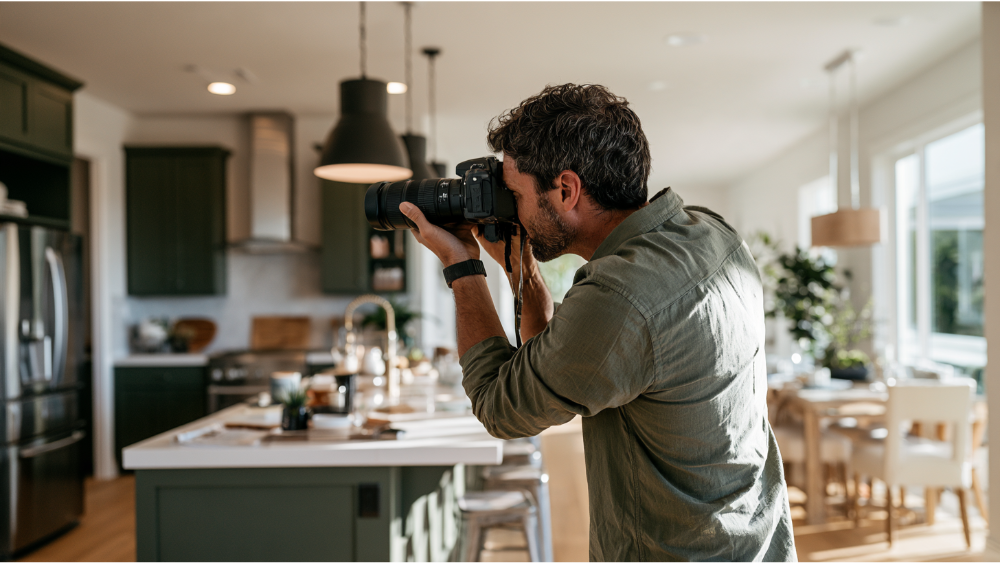
Professional photography for selling a house pays off based on how the home is being sold, not on a rule that fits everyone.
When Your Client Lists on the Market
Buyers compare homes side by side with dozens of others on a phone screen, and weak images get scrolled past. A full photo package is part of a strong listing presentation, alongside pricing, marketing, and negotiations. This is where you earn your commission as a newer agent.
When Repairs Come First
Schedule the shoot after the repairs and cleanup are finished. Photographing a home mid-renovation wastes the fee, so coach your seller to sequence the work before the camera and list the improved home.
When the Home Is Vacant or Unstaged
An empty or cluttered home still needs accurate, well-lit photos the moment it goes on the MLS. A quick clean and good light do most of the work, and you can weigh virtual staging as an add-on depending on the room.
Professional Photographer vs. Smartphone: What You're Paying For
- Balancing bright windows against dim interiors so the room and the view both read clearly
- Keeping vertical lines straight instead of leaning
- Controlling the distortion wide angle lenses create, so a small room isn't misrepresented
- Accurate color, especially with mixed bulb temperatures
- Composition and perspective that show how a space flows
Be fair to a phone. In great natural light, it handles a simple, bright home fine. It's the hard rooms, dark bathrooms, backlit windows, tight spaces, where better equipment and a trained eye earn the fee. As you build your reputation, DIY phone shots on a high-value listing are rarely worth the risk.
How Much Does Real Estate Photography Cost, and Who Pays?

There's no national pricing standard. Industry guides commonly put a basic residential package around $150 to $350, often including roughly 20 to 40 edited high quality images delivered in 24 to 48 hours. Treat that as a benchmark, not a quote. Cost shifts with square footage, travel, photo count, twilight shoots, drone, floor plans, and virtual staging.
Most listing agents include basic photography in their marketing budget. Some bill it back, and most don't cover add-ons. As a newer agent, build this into your listing math early. Ask two or three local photographers for a Sacramento-area quote and get the included services in writing.
How to Prepare a Home for the Photo Shoot
The photographer controls the camera, not the countertops. Prep is where most of the improvement comes from, and it's free. Walk your seller through this checklist before the shoot.
Inside the House
- Clean surfaces and wash the windows
- Clear counters and floors
- Put away medications, mail, valuables, and anything with the seller's name on it
- Make the beds and pull furniture a few inches off the walls
- Replace burned-out bulbs and match bulb color room to room
- Open the blinds so rooms get the best possible light
- Hide trash cans, pet bowls, and family photos
Outside and Curb Appeal
- Move vehicles off the driveway
- Coil hoses, mow and edge, sweep the entry
- Tidy the patio furniture so the exterior photos look inviting
Tell the photographer about special features a camera might miss: a new roof, an upgraded panel, a workshop, a view. NAR found 83% of buyers' agents say staging helps buyers picture a home as their own, and basic prep gets most of that effect.
Which Shots Should Property Listings Include?
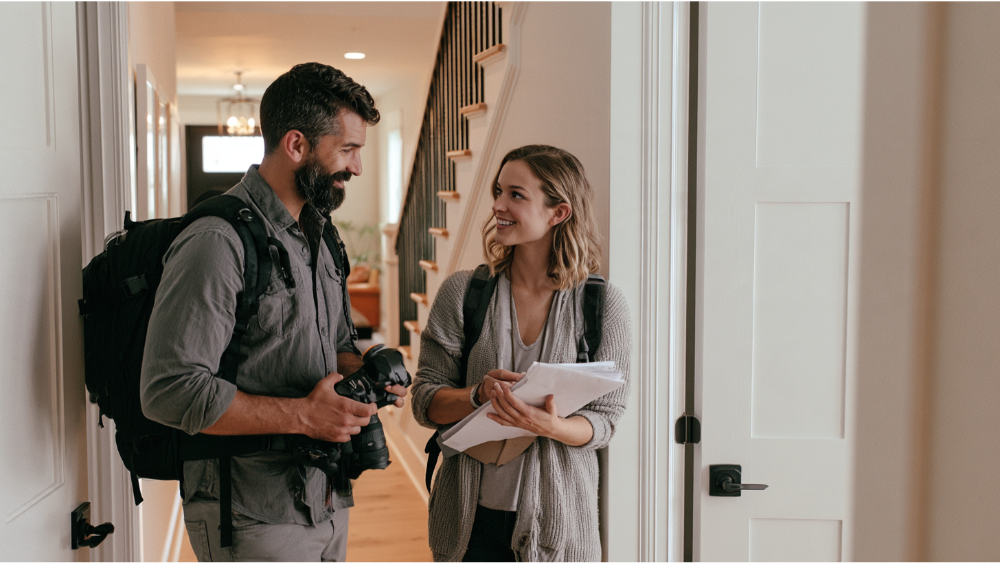
- Move vehicles off the driveway
- Coil hoses, mow and edge, sweep the entry
- Tidy the patio furniture so the exterior photos look inviting
Sequence matters more than volume, and repetitive angles hurt more than they help. Whatever you capture should showcase the home honestly, since the same gallery usually gets reused across social media platforms.
Photo Editing: What's Allowed, and What Makes Listings Stand Out
Routine exposure, white balance, straightening, cropping, and ordinary color correction are normal professional editing, and California's statute excludes them from its definition of digital alteration. Consistent treatment across every photo is a big part of what makes listings stand out, because even light and true color bring a room to life.
Adding, removing, or changing things is different: furniture, flooring, paint, landscape, a replaced sky. Virtual staging and AI renovation renderings belong in that group. Effective January 1, 2026, California Business and Professions Code Section 10140.8 requires digitally altered images used to promote a sale to carry a conspicuous disclosure and provide access to the original image. The law is written for licensed brokers and salespersons, so this one is on you to get right. Aim for attractive but accurate.
What Sacramento-Area Agents Should Know
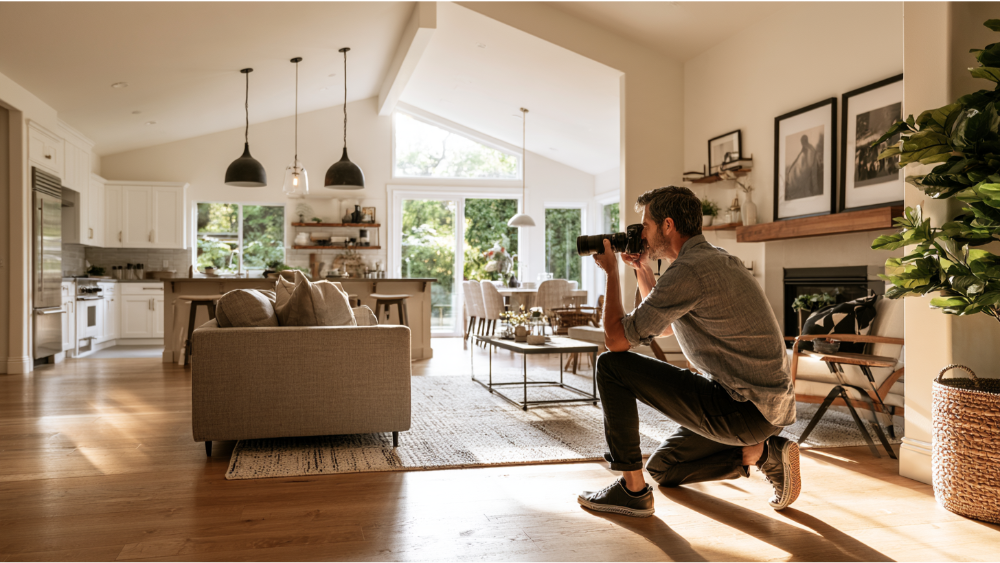
MetroList is the MLS used across the Sacramento region. Under its rules effective February 2, 2026, at least one image showing the front exterior generally must be attached within one day of entering the listing or its on-market date, whichever is later. A signed seller waiver applies if your client doesn't want a property image shown. Photos can't include logos, signs, people, commission information, contact details, or promotional text.
Real estate professionals recheck these rules often, so confirm with MetroList before you list. All of it applies to public listings on the MLS.
Are Drone, Video, and Floor Plans Worth It?
A floor plan helps when the layout is confusing. Video and virtual tours earn their keep with remote buyers. Twilight works when the exterior lighting and outdoor living space are genuinely strong.
Acreage, Golf Course Lots, and Luxury Estates
Drone makes the most sense for acreage, outbuildings, neighborhood context, or a lot backing a golf course. Luxury homes, luxury estates, and new construction also tend to justify video, because the layout itself is a selling point.
The FAA treats drone photos taken to help sell property as non-recreational work under Part 107 (aircraft under 55 pounds, generally 400 feet maximum altitude, visual line of sight). Ask your operator to confirm Part 107 certification.
Questions to Ask Real Estate Photographers Before Hiring
Before hiring a professional real estate photographer, ask:
- Can I see a full gallery of high quality work from a home like this one?
- What's included in the price, and what's an add-on?
- How many final edited images do I get, and how fast?
- Is your drone work Part 107 compliant?
- Who owns the copyright, and where may I use the photos?
- How are altered or virtually staged images labeled?
Experienced photographers answer all of these easily, and a true professional will tell you when an add-on isn't worth it for a particular home. The copyright question is the one almost nobody asks. Under U.S. Copyright Office guidance, the person who takes the photo is generally the initial owner, and paying for the shoot doesn't automatically transfer ownership. That matters if the home relists later with different real estate agents.
What If the House Isn't Photo-Ready?
Early in your career, you'll take listings that aren't picture-perfect. Maybe the home is still full of a previous owner's belongings. Maybe repairs piled up faster than the seller's budget allowed, or the timeline doesn't leave room for staging. None of that makes a home unsellable, and knowing how to handle it sets you apart.
- Clean it up and photograph it accurately, as-is
- Make a few targeted improvements first, then shoot
- Prioritize low-cost, high-impact fixes before the shoot
- Set expectations with the seller about what photos can and can't do
As a newer agent, your value here is guiding the seller to the prep that pays off. A little decluttering and good light often change a gallery more than any expensive add-on, and that's advice you can give on day one.
Helping Your Client Choose a Path Before Paying for Photography

Does the seller want maximum exposure and can wait for it? List, with strong photography behind it. Do they want more money without a big prep budget? Target the repairs that move the needle, then shoot. Walking clients through these tradeoffs early is how you build trust and win repeat business.
Newer agents who master listing photography stand out fast. It's a concrete, teachable skill that shows sellers you understand how buyers actually shop. Get the prep right, get the gallery right, and your listings compete with anything on the market.
Build a short bench of two or three local photographers whose work you trust, learn their packages and turnaround times, and you'll always have a reliable answer when a seller asks how the home will be marketed. That preparation lets you move forward with confidence on every listing.
Frequently Asked Questions
Who normally pays for listing photos?
Usually the listing agent covers a basic package as part of marketing, but not always. Add-ons like drone or virtual staging are often billed separately.
How many photos should a listing include?
There's no universal number. Packages commonly run 20 to 40 edited images. Cover every meaningful room once, in a logical order, and stop before it gets repetitive.
Can photos be virtually staged in California?
Yes, but as of January 1, 2026, digitally altered images used to promote a sale must be disclosed with access to the original. Confirm specifics with your broker.
Do I need professional photos for a vacant home?
You still want accurate, well-lit photos the moment it lists on the MLS. Virtual staging can be a worthwhile add-on to help buyers picture the space.
