


Buying and Selling a House at the Same Time: How to Make Both Transactions Work

Key Takeaway
Buying and selling a house at the same time is manageable when you choose the right sequence for your finances: sell first to secure proceeds, buy first if you can carry both payments, or coordinate closings to transfer funds directly. Your debt-to-income ratio, available equity, and timing risk tolerance determine which path works. According to NAR's 2025 data, 54% of repeat buyers used proceeds from a prior sale, with a median down payment of 23%.
Trying to sell one home and buy another at once can feel like you're being asked to time two things that refuse to cooperate. Take a breath. You have more control than it feels like right now. You can sell your current home first, buy your next home first, or coordinate both transactions so they close close together. The right order depends on three things: whether you need your sale proceeds for the next down payment, whether you can qualify while carrying both housing payments, and how much timing risk you can comfortably accept. There is no single correct order. What follows gives you real options and a way to choose, not a one-size-fits-all answer.
Start Here: 4 Questions That Narrow Your Options

Before you look at a single listing or accept an offer, answer these four questions. They quietly eliminate the paths that won't work for your finances, so you're not weighing six strategies you can't actually use.
- Do you need proceeds from your current home for the next down payment? If yes, selling first (or linking the closing dates) usually matters more.
- Can you qualify while both housing payments are counted? This decides whether buying first is realistic at all.
- How much timing risk can you accept? Two moves, temporary housing, and overlapping costs are tolerable for some and not for others.
- What's your plan if either closing is delayed? A backup matters because closing dates rarely line up perfectly.
Run the numbers on your home equity first. Knowing your estimated equity, and budgeting for any overlap in expenses, keeps the rest of these decisions grounded in reality rather than hope. Buying and selling a house at same time truly requires careful planning more than luck.
Your Three Timing Options at a Glance
Every version of buying and selling a house at same time comes down to one of three sequences. Which one is safer depends partly on your local housing market. In a seller's market, homes sell quickly and your buyer-side offers face more competition. In a buyer's market, your home may sit longer, which changes how much you can lean on timing. Reading the real estate market before you commit helps you pick the sequence that fits conditions, not just your hopes.
Option A — Sell Your Current House First
Selling your current house first means you know exactly what you have to work with before you commit to a new home purchase.
- Advantages: You have your proceeds in hand, you've shed the existing mortgage, and your purchase budget is clear. No stress about two payments.
- Risks: You may need somewhere to live between homes, storage for your things, and possibly two moves plus added moving expenses.
- Tools that help: A rent back agreement lets you stay in your sold home temporarily. An extended closing date buys time. A short term rental covers the gap if there is one.
This path fits homeowners who need their sale proceeds to buy a house and want less financial exposure while they look. The tradeoff is logistics, not money. Plan for the gap and you avoid the worst-case version where your home sells but you have nowhere lined up to go.
Option B — Buy Your New Home First
Buying first lets you move once, into a home you chose without a clock running.
- Advantages: One move instead of two. No pressure to settle for the first acceptable house because you need to be out.
- Risks: You may carry two mortgage payments plus the overlapping costs of owning two homes. Qualifying is harder when a lender counts both.
- Financing options: Savings, an equity line of credit, a bridge loan, a second mortgage, or other lender-approved financing.
This works best for homeowners with strong income, solid reserves, and real equity. Be honest with yourself here. Carrying two mortgages, even briefly, is genuine financial strain. If your existing home takes longer to sell than expected, those overlapping payments are yours to cover until your home sells.
Option C — Coordinate Both Transactions (Including Same Day Closings)
The appealing version is selling in the morning and buying that afternoon, with your proceeds rolling straight into the new home purchase. It's possible. It's also fragile, because it depends on a chain of events happening in order:
- Your buyer has to actually close.
- Those funds have to be received and available.
- Your existing mortgage and any other liens get paid off.
- The remaining money has to reach your purchase closing.
- Your new lender has to stay clear to fund the new mortgage.
- Moving and possession have to line up too.
A home sale contingency can protect you here by letting you cancel the purchase if your current home doesn't sell. If your first buyer's financing falls through late, the whole chain stalls, which is why a buffer, even a few days, beats assuming everything lands on the same day. Confirm the exact sequence of closing dates with your escrow team early, since a purchase dependent on another sale leaves little slack.
Home Sale Contingency vs. Settlement Contingency: What's the Difference?

These two terms get used interchangeably, but they protect you at different stages.
- Home sale contingency: Generally applies when your current home still needs to sell. It gives you time to find a buyer before you're locked into the new purchase.
- Settlement contingency: Generally applies when your current home is already under contract but hasn't closed yet.
Terminology and the exact rights tied to each vary by contract and by location, so treat these as the general idea rather than a universal rule. Here's the honest part: in a competitive seller's market, a contingent offer is less attractive to the seller on the other side, and it can weaken your position against buyers without strings attached. A home sale contingency reads very differently in a buyer's market, where sellers are more willing to accept one. Weigh that before you write a contingent offer.
How Lenders Treat Your Existing Mortgage When You Qualify
Your debt to income ratio, or DTI, is your monthly debt payments divided by your gross monthly income. Your mortgage lender uses it to judge whether you can handle the new payment, and different loan products use different limits.
Here's the catch most people miss. If your current home is pending sale but the title won't transfer before your new home purchase closes, the lender generally has to count both homes. That means both the existing home's PITIA (principal, interest, taxes, insurance, and any association costs) and the new home's PITIA show up in your DTI. Under Fannie Mae's conforming-loan guidance, the existing payment may be excluded only when you have an executed sales contract and any buyer-financing contingencies have been cleared. So "my house is listed" often isn't enough. A fully signed contract with cleared conditions can change what you qualify for, and getting pre approved early tells you where you stand.
For reference, Fannie Mae's standard maximum DTI for manually underwritten loans is 36%, which may stretch to 45% when credit and reserve requirements are met, and up to 50% for loans approved through Desktop Underwriter. These aren't approval guarantees. Government-backed loans, lender overlays, your credit, and your reserves can all produce different results. Talk to a lender before you make or accept any offer so you know where you actually stand.
How to Access Your Home Equity Before the Sale Closes
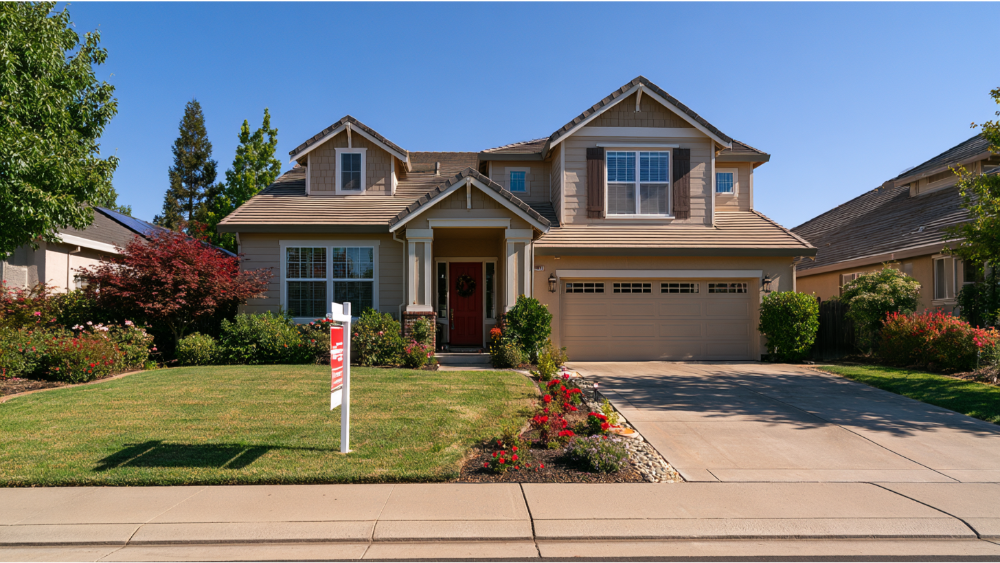
For most people, equity isn't a side issue, it's the whole problem. In the National Association of REALTORS 2025 profile, 54% of repeat buyers used proceeds from a previous home sale to fund their next home purchase. The median down payment for repeat buyers was 23%, about 30% paid cash, and the typical seller had owned their home for 11 years, long enough to build real equity. Unlocking that equity on the right timeline is usually the core challenge.
A couple of important notes on these financing options. An equity line of credit usually carries a variable rate, your home secures it, it's generally paid off in full when your home sells, and its payment counts toward your DTI. A home equity loan lets you take a fixed lump sum and adds a fixed payment on top of your existing one. A bridge loan may let you borrow up to roughly 80% of your home's value, often with interest only payments during the short term loan, but the obligation generally counts in your DTI unless you have an executed sales contract with cleared contingencies. A bridge loan is built specifically to cover the gap between buying and selling, which is why it comes up so often in this situation. A cash out refinance is another route, though it resets your current loan. Rates, fees, and terms vary widely, so don't assume. Confirm the details with your lender, and a financial advisor can help you weigh which option fits.
Choose How to Sell Your Current Home in the Local Housing Market: Three Real Options
How you sell directly affects when your equity becomes available and how much coordination the whole move requires. There's no single right answer here either. We present all three paths as equally valid because your situation decides which one fits, not us.
List Your Home With an Experienced Real Estate Agent
A traditional listing can earn you the highest gross home sale price, which is why it's the right call for many sellers. It also asks the most of you up front. You'll typically declutter, deep clean, tend to curb appeal, bring in professional photography, and sometimes stage so the home shows well and sells faster. An experienced real estate agent helps you set realistic expectations on both price and timing, runs a comparative market analysis to gauge market value, and reads the local market so you know how market fluctuations affect how fast your home sells. Using the same real estate agent on both sides can also streamline your home search. That matters when you're coordinating a home purchase on the other side.
The honest tradeoff is time and certainty. Listing with a real estate agent involves showings, buyer financing that can fall through, and a timeline you don't fully control. For homeowners who want maximum market exposure and can tolerate that, it's a strong choice. Keeping the same agent across both transactions keeps everyone aligned. Property Sales Group supports this path too, so if listing is right for you, we'll help you do it well. We're not anti-agent.
Get a Fast Cash Offer
When you need certainty more than top dollar, a cash offer removes the timing risk that makes coordinated moves stressful. You sell as-is, with no fees and no out-of-pocket expenses, and you close on your timeline. Property Sales Group can close in as little as 7 days when that's what you need, and may offer up to $100,000 as a cash advance before you move out. Both are maximums tied to your situation, not automatic.
Our in-house construction team is the reason this works. Because we handle renovations ourselves after purchase, we can buy homes as-is and often offer more than buyers who have to outsource every repair cost. For a homeowner whose next purchase depends on unlocking equity quickly, that certainty can be the difference between a smooth move and a scramble. When your home sells on a known date, the buying and selling puzzle gets a lot simpler.
Fix Now, Sell for More
Sometimes the problem is that your home would sell for meaningfully more with some work, but you can't afford that work while buying another home. This path solves exactly that. Property Sales Group funds strategic repairs and renovations with no out-of-pocket cost to you, then you earn more after the improvements. For buyers who need a larger down payment on the new property, those higher net proceeds can be what makes the move possible.
How Rent Back Agreements Buy You Moving Time

A rent back lets you stay in your home for a short period after it closes, so you're not forced out the day the sale funds. It's a practical fix for finding temporary housing during the gap between selling and moving into your next place, and it works much like a short term rental in your own former home. For some, an extended stay hotel fills that gap instead.
The terms of a rent back agreement belong in writing. Spell out the payment, any deposit, who carries homeowners insurance, who has possession, how damage is handled, and the firm move-out date. These temporary housing costs should fit your budget. Duration isn't fully up to you and your buyer, either. Many owner-occupied mortgages require the buyer to move in within 60 days (the Fannie Mae/Freddie Mac Uniform Security Instrument generally includes this, and FHA guidance is similar), which caps how long you can realistically stay. Treat a rent back agreement as a bridge, not an open-ended arrangement, and confirm the specifics with the buyer's lender since contracts vary.
What Can Go Wrong — and Your Backup Plan
None of this means something will go wrong. It means you plan for it so a hiccup stays a hiccup. Closing dates rarely align perfectly, and a little preparation keeps you from ever facing a stretch with nowhere to live.
Keep an emergency fund after closing to cover unexpected expenses. It's the simplest insurance against every one of these.
Your Step-by-Step Coordination Checklist

- Estimate your current house value and likely net proceeds.
- Talk to a lender about financing options before you shop for the next home.
- Decide whether selling first, buying first, or linking closing dates fits your finances.
- Compare all three selling paths against your timeline and the current housing market.
- Set a backup housing and funding plan.
- Put all contingencies, possession terms, and dates in writing.
- Keep your lender and escrow team updated on both the buying and selling sides.
- Review closing documents (you must receive the Closing Disclosure at least 3 business days before closing) and confirm the earnest money deposit and wiring instructions directly.
- Schedule moving help with flexible dates.
- Keep an emergency cash buffer after closing.
Budget for overlapping closing costs on both sides. Two transactions mean two sets of expenses, and an extended closing period on one can give you room to finalize the other.
A Quick Note on Taxes When You Sell
A lot of homeowners believe they have to immediately buy another home to avoid federal tax on their sale. That's not how it works. The federal home-sale exclusion generally lets you exclude up to $250,000 of gain as an individual, or up to $500,000 for many married couples filing jointly, as long as you owned and used the home as your main residence for at least 2 of the last 5 years and haven't claimed the exclusion on another sale within the prior 2-year window. A primary residence generally doesn't qualify for a 1031 like-kind exchange, and buying another primary home isn't what determines your eligibility. This isn't tax advice, so talk to a qualified tax professional about your situation.
When a Fast Cash Offer May Simplify the Whole Selling Process

A cash offer isn't right for everyone, but it removes real friction in specific situations. It may help when your next home purchase depends on unlocking equity quickly, when your home needs work, when showings would collide with your move, when a traditional buyer's financing adds too much uncertainty, when you need more time before moving, or when you simply want to be done with repair expenses and fees.
The trust signals matter here. Property Sales Group uses the standard California Purchase Agreement rather than a custom buyer-favoring contract, opens escrow within 24 hours of a signed contract, and backs the deal with a guaranteed close, or we pay you. That's a meaningful contrast with unlicensed wholesalers who use unregulated contracts. And to be straight with you: if maximum price matters more than speed, a traditional listing with a real estate agent or a fix-and-sell may serve you better. Your situation decides.
Frequently Asked Questions
How difficult is it to sell and buy a house at the same time? It's a real financial and logistical challenge, but it's manageable with a plan. The difficulty usually comes from timing and funding, both of which you can reduce by choosing the selling path that fits your situation and by watching the housing market as you go. If both homes are in the same market, conditions cut both ways on price and timing.
Is it better to buy or sell a house first? There's no universal answer. It depends on whether you need your sale proceeds, whether you can qualify carrying two mortgages, and how much timing risk you can accept.
Can I close on both houses on the same day? Sometimes, yes, but same day closings are fragile. Your home has to sell and fund, proceeds have to reach the home purchase, and your new lender has to stay clear to fund, so build in a buffer rather than assuming perfect closing dates.
How can I avoid paying two mortgages? Sell first, use a rent back agreement or an extended closing to cover the gap, or take a fast cash offer for certainty on when your current home sells.
Can I avoid capital gains taxes by buying another house? The federal exclusion is based on the 2-of-5-year ownership and use test, not on reinvesting your proceeds. Buying another home doesn't determine eligibility, so check with a tax professional.
Move Forward With Confidence — Compare Your Real Options
If you're reading this because the timing feels impossible, know that it rarely is. You have real options, and you get to decide which one fits your money, your qualification, and your move. Our promise is simple: fast, fair, and stress-free, with no pressure to choose any single path. We've helped over 1,200 homeowners in Northern California handle buying and selling at the same time.
Find out what your home is worth and compare your options, or talk to Serge directly. Call or text to talk to an expert at 916-990-7376. Get a fast cash offer, or just get straightforward information to help you move forward with confidence.
