


What Is the Best Time for an Open House?
Key Takeaway
The best time for an open house is typically a weekend early afternoon, with 1 to 3 p.m. being the single most common window and 1 p.m. the most frequently scheduled start time in a 2026 survey of nearly 14,000 open houses. Saturday now edges out Sunday in actual scheduling, 54.6% versus 28.7%. Adjust for your home's natural light, local competition, and when buyers in your area are genuinely free.
For most sellers, the safest default is a two-hour weekend open house in the early afternoon, usually 1 to 3 p.m., with anything from 11 a.m. to 3 p.m. working well. Pick Saturday or Sunday based on local competition, weather, daylight, and when buyers in your area are actually free. No national data proves that one magic slot produces more offers, and the best time really depends on your home and your market.
If you're getting ready to list (or you're already listed) and you're feeling the weight of staging the place, clearing out for a few hours, and letting strangers walk through your home, this is for you. We'll give you a clear plan and your real options. And one thing worth saying up front: an open house is optional. It's one way to sell, not the only way.
Best Open House Times at a Glance
These are starting points, not guarantees. Natural light makes rooms feel bigger and more inviting, so lean toward hours when your home shows brightest. Check what's happening locally, and ask your listing agent what their recent sign-in data shows about turnout in your neighborhood. A good real estate agent can tell you whether weekends or a weekday twilight slot tends to attract more buyers to your type of property. The right open house time is the one that puts your home in front of potential buyers when they can comfortably attend.
Is Saturday or Sunday the Best Day for an Open House?
Here's the honest version, in three layers.
The traditional recommendation is a Sunday afternoon, early in the afternoon. Many agents have scheduled it that way for years, and plenty still swear by it. A listing agent who favors Sunday will point to decades of habit among both buyers and sellers.
What's actually being scheduled tells a slightly different story. A July 2026 snapshot of 13,757 listed open houses across 49 major U.S. cities found that 83.3% were held on weekends, but Saturday led at 54.6% versus Sunday's 28.7%. Most events (80.2%) started between 11 a.m. and 2 p.m., and 1 p.m. was the single most common start time at 22.9%. In other words, most open houses now land on a weekend in the early afternoon, which many agents treat as the ideal time.
What outcome data proves is the part most articles skip: not much. That snapshot measured what agents scheduled, not how many people showed up or how many offers came in. Scheduled frequency isn't proof of performance. Sources contradict each other partly because of differences in market, season, and method, and partly because "when an open house was listed" is not the same as "when buyers actually came and bought."
So which day should you pick? Look at your own market. Scan nearby competing open houses, because you don't want to split foot traffic with three identical listings down the street. Avoid scheduling over a major local event, game days, and holidays. Then choose the day your home is easiest to reach and shows at its best. The best day is the one that brings the right buyers to your door at a time they can comfortably attend.
How Long Should an Open House Last?
Two hours is the current norm. In that 2026 dataset, 56.8% of scheduled open houses lasted exactly two hours, and the median duration was 120 minutes. For most homes, that's the right call.
Three hours can make sense in a market with heavy traffic or for a larger home where visitors need more time to wander the space. But stretching an open house across the whole day usually backfires. It thins out your traffic, so the house feels empty most of the time, and an empty open house can quietly signal low demand to anyone paying attention.
A tighter window does the opposite. When buyers arrive within the same two hours, they cross paths, they see other people interested, and that gentle sense of competition can nudge a hesitant buyer toward action. Concentrating your potential buyers into one afternoon tends to make the event feel busier and more urgent.
Should You Hold an Open House the First Weekend After Listing?
Yes, the first weekend tends to capture peak attention. A fresh listing is new to every buyer watching the market, and that initial burst of curiosity is real. But it's not the only good time, and it doesn't have to be the only open house you hold.
The same 2026 data shows this clearly: 26.8% of scheduled open houses involved listings in their first seven days, while 30.8% involved listings that were 31 to 90 days old. Two valid uses, same tool. One launches a new listing. The other re-energizes one that's gone quiet.
A common move from the agent hosting the home is to make the listing live on the MLS Thursday or Friday, so it's visible and searchable before the weekend rush. When the listing hits the MLS early, buyers and their agents have a day or two to plan their weekend route and add your open house to it. Real estate websites then surface it to people already browsing your area. If your home has been sitting and you've since made a meaningful change, a price adjustment or better photos or fresh staging, a second open house can bring people back for another look. Neither timing is proven to convert better, so pick the one that fits where your listing actually is.
Adjust the Time for Your Home and Neighborhood
Natural light and window orientation
Schedule your open house for the hours your rooms look brightest. South and west-facing windows flood with light in the afternoon; east-facing rooms shine in the morning. Walk through at different times and note when your home feels its best, and test faucets and lighting so nothing distracts from the showing. If your best light lands in the morning, a weekend morning slot may serve you better than the standard afternoon window.
Weather, season, and daylight
Spring and early summer are the busiest showing seasons, with the most active buyers. Fall can work well when foliage and curb appeal are on your side. Winter means hosting midday, when there's the most daylight and the house is warmest and most welcoming. The best time of year to attract more serious buyers is usually when the weather makes it easy for them to get out and look.
Parking, traffic, and local events
Easy parking matters more than people expect; a buyer who circles the block three times arrives annoyed. Avoid a big community event, holidays, and game days that pull people away or clog the roads. It also helps to know what your neighbors have going on that weekend, since nearby local events can either draw a crowd past your door or empty the street.
Urban, suburban, commuter, and rural patterns
Commuter and suburban areas lean heavily toward weekends, and weekend mornings often work well for families planning their day. Urban neighborhoods increasingly support weekday open houses in the twilight hours for buyers coming straight from work. Whatever the pattern in most markets, verify it locally rather than assuming, because location shapes when your target buyer is actually free.
What Matters More Than the Open House Time Slot?
The clock can't fix a price that's too high. It can't fix weak listing photos, deferred maintenance, thin online exposure, a home that's hard to show privately, or slow follow up after someone expresses interest. Timing affects results at the margins. These things decide the outcome, and the listing price does more heavy lifting than any time slot.
The national numbers put an open house in perspective. In NAR's 2025 research, 49% of recent buyers used an open house as an information source (highest at 54% among buyers 35 to 44), and 58% of agent-assisted sellers had their home marketed with one. But only 4% of buyers found the home they actually purchased through the combined "yard sign/open house sign" category. (That's not the same as saying only 4% bought because of an open house; it measures where they first found the property.)
Online presentation still carries the most weight. Just 24% of internet-using buyers rated upcoming open house information "very useful," compared with 83% for photos. And buyers search for a median of 10 weeks and view multiple homes, usually seven, so your open house is one step in a longer comparison, not the finish line. Treat it as part of a broader plan. (This is general information, not financial or legal advice.)
Measure Serious Buyer Interest, Not Just Attendance
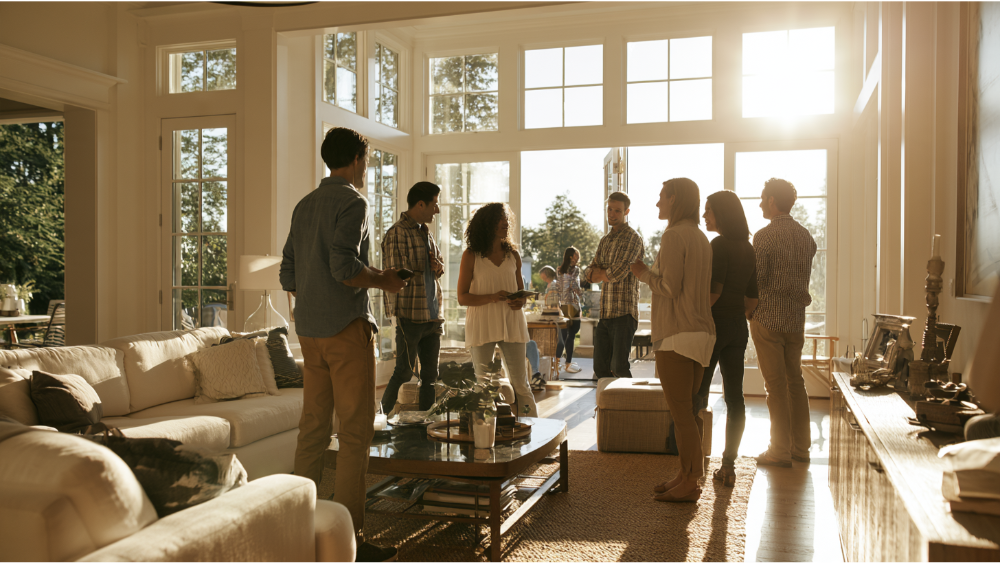
Ten casual browsers aren't necessarily better than four financially prepared buyers. A packed open house feels great, but it only matters if the right people show up. A successful showing attracts buyers who can and will act, not just more buyers filling the rooms.
Track the signals that actually point to a sale:
- Total visitors on the sign in sheet, and how many were represented by an agent
- Requests for a second walk-through, sometimes the same day
- Questions about offers, financing, or closing
- Private showing requests
- Buyer-agent follow up after the event
- Written feedback
- Actual offers
Weekday twilight opens often draw a smaller crowd, but those visitors tend to be more focused. Fewer tire-kickers, more people who left work early because they're serious. When those visitors ask real questions and show strong interest, that's often a better lead than a packed room of browsers, especially in highly competitive markets.
Open House Privacy and Safety
Before you open your doors, protect yourself. Drawing on NAR safety guidance:
- Lock away medications, valuables, mail, checks, and bank statements
- Remove anything with identifying personal information from view
- Use one controlled entrance so you can see who comes and goes
- Ask visitors to sign in, and consider requesting ID
- Limit how many people are inside at once
- Do a full walk-through afterward: doors, windows, and the garage
Local requirements vary, so confirm what applies where you live. For a deeper version of this list, see our open house safety and privacy checklist.
An Open House Is One Option, Not Your Only Option
Let's be honest about what an open house actually asks of you. Deep cleaning. Getting kids and pets out of the house. Securing your personal information. Leaving for hours. Letting strangers walk through the place you live. And if it doesn't sell, doing all of it again next weekend. Most people underestimate how draining that routine becomes.
That's a lot. Which is exactly why you deserve real options. At Property Sales Group, we help homeowners choose the path that fits their life, not a one-size-fits-all script:
- List your home on the market. A traditional listing with our support and a strategically timed open house. Best when you want maximum price and can handle a longer timeline.
- Get a fast cash offer. Sell as-is with no repairs, no showings, and no open houses. Close in as little as 7 days on your timeline, with up to $100,000 cash advance before you move out. No fees, no out-of-pocket expenses, and a guaranteed close, or we pay you.
- Fix now, sell for more. We fund the repairs upfront with no out-of-pocket cost to you, make strategic upgrades, and help you earn more after the improvements.
Every transaction uses a standard California Purchase Agreement, escrow opens within 24 hours, and our in-house construction team means we can buy as-is and still offer fairly. We're BBB Accredited with an A+ rating. No pressure, just real options so you can move forward with confidence.
Your Next Steps
You don't have to decide anything today. Find out what your home is worth, talk through your timeline, and see which path makes sense for your situation. No pressure, just find out what your options are.
Call or text to talk to an expert at 916-990-7376. Fast, fair, stress-free, the way selling your home should feel.
Frequently Asked Questions
What is the 3-3-3 rule in real estate?
It's a general rule of thumb some agents use: be ready to show your home on about three hours' notice, make sure it looks its best for the first three weeks on the market, and reassess your pricing or approach if there's no strong offer by then. It's a guideline, not a law.
What is the hardest month to sell a house?
The colder, slower stretch from late fall through winter typically sees fewer buyers and shorter daylight. Spring and early summer are the most active, highest-demand seasons.
Is 3 hours too long for an open house?
No. Two to four hours is normal, and three can work in a busy market or for a larger home. A tighter window can create more urgency and more overlap between visitors.
Is 11 a.m. too early for an open house?
Not usually. Many strong open houses start between 11 a.m. and 2 p.m., and a late-morning Saturday start catches buyers early in their day before plans fill up.
When is the best time for an open house?
For most sellers, a weekend early afternoon works well, with a Sunday afternoon or Saturday late-morning slot being the most common choices. The right answer depends on your local market, your home's light, and when buyers in your area are free.
Can I sell my home without holding an open house?
Yes. You can rely on private showings, or skip showings entirely with a fast cash offer and sell as-is on your timeline. Choose what fits your situation.
